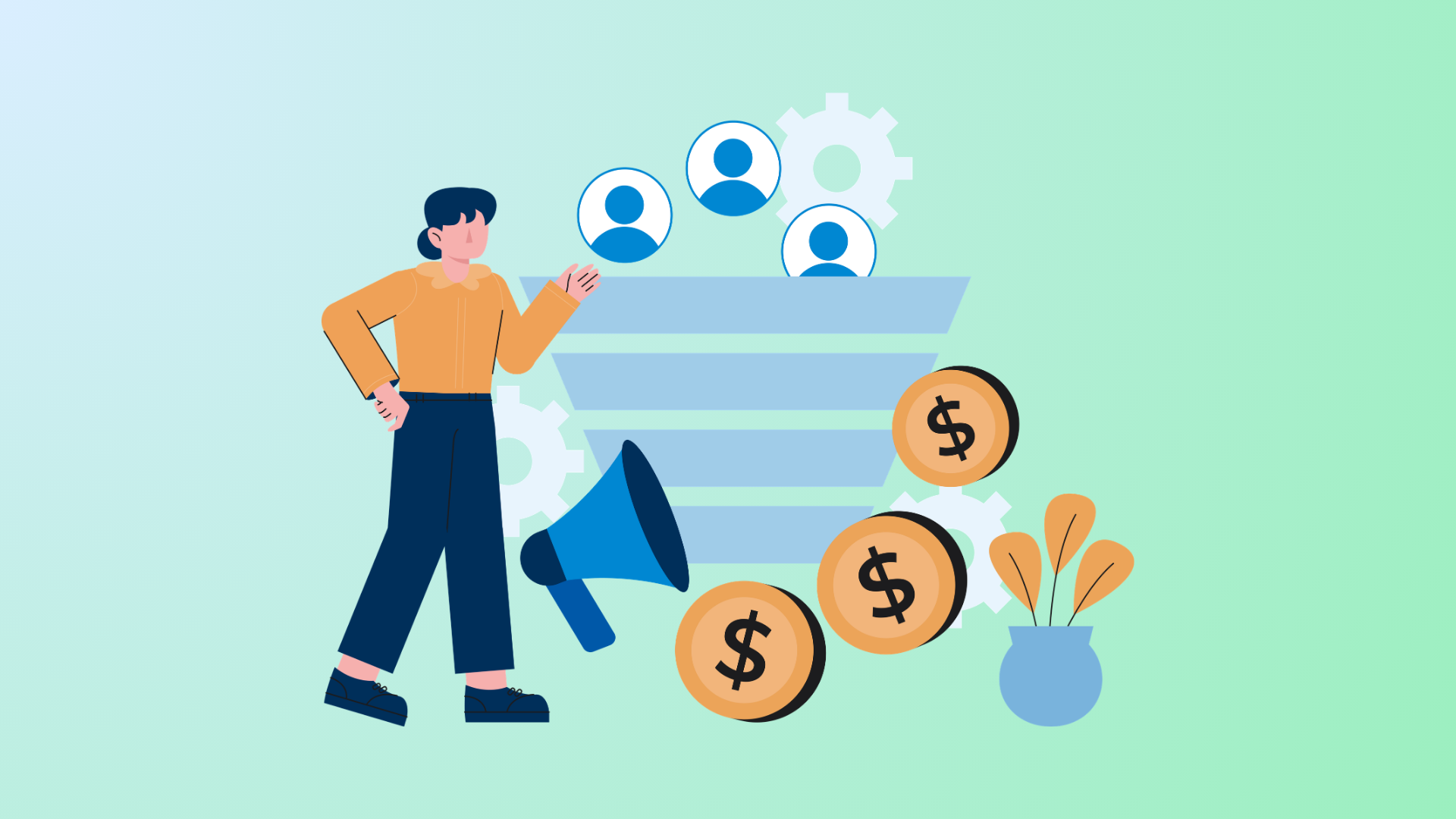
A sales funnel is a dynamic tool that shows a customer’s real journey—from the first touchpoint with your brand to the moment they pay. But theory is theory, and businesses are different: what works perfectly for an online store may be completely unsuitable for a B2B company or a bank.
In this article, we’ll break down specific sales funnel cases across different industries, share ready-to-use funnel templates, and explain how to adapt them to your business. If you haven’t read our foundational article on what a sales funnel is and how to build one, we recommend starting there. Now, let’s move on to the examples.
Why real sales funnel examples matter more than theory
Most entrepreneurs understand funnels in abstract terms: there’s an audience, some become leads, and some leads become customers. But in practice, the questions are very concrete: what exactly should you write in an email? How long should someone stay in the “interest” stage? When should you call?
That’s why real sales cases help more than any theory. They show decision-making logic in a specific context and make it easier to adapt the approach to your own business.
Sales funnel example for e-commerce (online store)
Let’s imagine an online women’s clothing store. The audience is broad and the decision cycle is short (from a few minutes to a few days). Here’s what a typical funnel template looks like:
Step 1. Awareness
Targeted ads on Instagram and TikTok, SEO traffic to category pages, and influencer collaborations. The goal is to drive as many relevant visitors to the site as possible.
Step 2. Interest
A potential customer browses the catalog, adds items to a wishlist or cart. At this stage, your job is to keep them engaged: strong visuals, detailed descriptions, real reviews, and easy filters.
Step 3. Decision
An abandoned-cart email, a pop-up offering 10% off for first-time customers, free shipping above a certain order value—these elements help push toward a purchase.
Step 4. Action
A fast, simple checkout flow. Multiple payment options. Email confirmation with delivery details.
Step 5. Retention
A loyalty program, personalized recommendations, and newsletters with new collections to turn a one-time buyer into a repeat customer.
B2B sales funnel: an example for a SaaS company
Here, the deal cycle can last from a few weeks to several months. Multiple people make the decision, and the cost of a mistake is much higher. The funnel is usually more structured.
Let’s look at an example for a SaaS platform selling a CRM system to small and mid-sized businesses:
Awareness: SEO articles in the blog, guest posts, conference talks, LinkedIn content from the founder.
Lead Generation: A free webinar or checklist in exchange for email. A sign-up form for a free trial.
Lead Nurturing: An onboarding email sequence, a demo call with a sales manager, customer case studies from similar industries.
Qualification: BANT analysis (Budget, Authority, Need, Timing) to define whether the lead is a fit and ready to move forward.
Proposal: A personalized commercial offer, product demo, handling objections.
Close: Agreement on terms, contract signing, payment, and handoff to Customer Success.
The key difference between B2B and B2C funnels is deeper personalization at each stage and much more objection handling. In B2B, the sales manager plays a central role—unlike e-commerce, where much of the process is automated.
Sales funnel example for a bank (credit products)
The financial sector is one of the most complex sales cases. Customers have doubts, compare competitors, and are highly sensitive to trust and brand reputation.
Awareness
The bank runs advertising campaigns online, on radio, and on TV, highlighting the benefits of its credit products. The goal is to build recognition and drive traffic to the website or branches.
Interest
Potential customers review terms on the website, compare rates, read reviews. The bank runs webinars and publishes financial literacy content. Fast responses matter here—via chat, messengers, or phone.
Decision-making
The customer submits an online application or visits a branch. A manager provides a personal consultation, helps choose the right product, and addresses objections (“What if I’m not approved?”, “Is the process complicated?”).
Deal completion
A convenient signing process—online or in-branch. Clear explanations of terms: interest rate, repayment schedule, penalties. After signing, the bank supports the customer throughout repayment.
Sales funnel for online courses and EdTech
The online education market is extremely competitive. People want outcomes, not “just another course.” A typical funnel template looks like this:
Free content: YouTube videos, Instagram Reels, podcasts build expertise and attract organic traffic.
Free lead magnet: A mini-course, PDF guide, or free webinar to capture contact details and start warming up the lead.
Email nurturing: A sequence of value-driven emails with student results, testimonials, and objection handling.
Sales webinar or landing page: A detailed breakdown of the program, outcome demonstration, limited-time offer (deadline + bonuses).
Purchase and onboarding: Simple payment, instant access to materials, and a welcome sequence for new students.
How to choose the right funnel template for your business
All the cases above follow the same core logic, but differ in the details. To choose the right funnel template, answer a few questions:
- Who is your customer? An individual (B2C) or a company (B2B)? This defines cycle length and personalization depth.
- What is your average order value? The higher the price, the more touchpoints are typically needed before closing.
- Which channel is primary? SEO, paid traffic, cold outreach, referrals—this shapes the top of your funnel.
- Where do customers drop off? Stage-by-stage conversion analysis reveals the weak spot—that’s where optimization should start.
Common mistakes when building a sales funnel
Even with a strong funnel example in front of them, companies often make the same mistakes:
- No clear stage definitions. If the team interprets “lead” or “qualified lead” differently, CRM data becomes chaotic.
- Focusing only on the top of the funnel. New leads are always more expensive than warmed-up contacts. Don’t ignore the middle and bottom stages.
- Building a funnel but not measuring it. Without metrics (stage-to-stage conversion, cost per lead, cycle length), you can’t know what’s working.
- Ignoring retention. The funnel doesn’t end with the sale. Repeat purchases and referrals are also outcomes of a well-built process.
Conclusion: a sales funnel is a living tool
There’s no “perfect” funnel template that works for everyone. There’s a logic that needs to be adapted to your business, audience, and product. That’s why it’s so valuable to study sales cases across different industries (e-commerce, B2B, finance, education) and take what fits your reality.
Start with a simple four-step funnel template, measure each stage, optimize регулярно—and your sales funnel will become a strong foundation for growth.