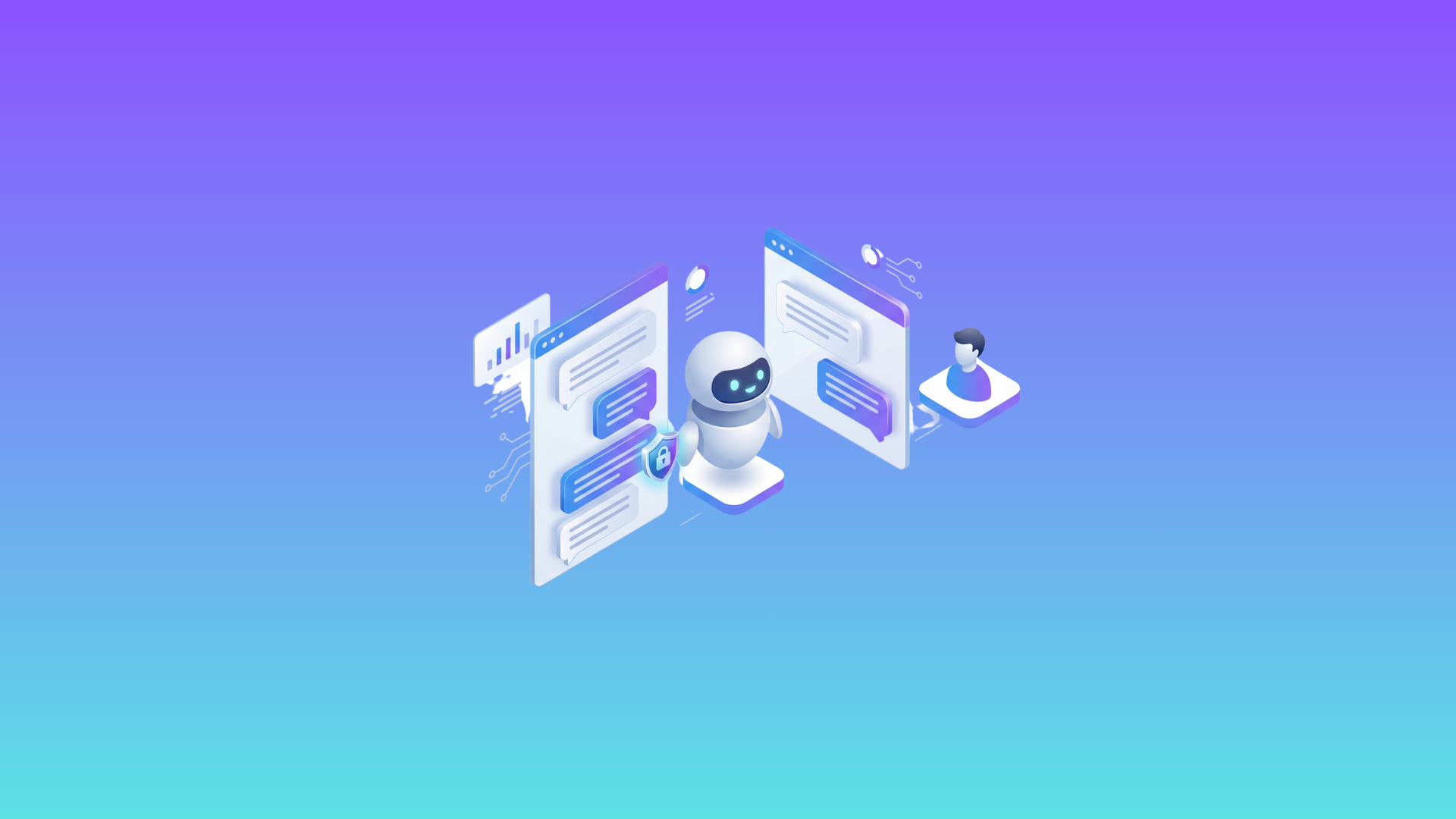
Modern chatbots have long evolved beyond simple prompts and “yes/no” buttons. Today, they process orders, provide consultations on financial products, check application statuses, and respond to customer inquiries 24/7 — without human intervention.
That’s why chatbot security has become just as important as functionality: the more responsibilities you delegate to an automated system, the more serious the consequences if it turns out to be vulnerable.
In this article, we’ll explore the standards and approaches that allow you to deploy chatbots in customer service safely — without data leaks or reputational risks. This material will be useful for product managers, CTOs, cybersecurity specialists, and anyone already implementing or planning to implement automated support.
Why Chatbot Security Is a Separate Discipline
When businesses first launch a chatbot, security often takes a back seat. The focus is usually on response speed, answer quality, and CRM integration. This is understandable — but risky.
A chatbot is an entry point to internal systems, a storage or transit node for personal data, and sometimes a channel through which attackers attempt to gain access to accounts or manipulate business processes.
Chatbot threats are specific and differ from traditional web threats. These include prompt injection attacks, where malicious input forces the system to perform unintended actions; bypassing content filters; and abusing escalation to human agents. All of this requires a dedicated security strategy.
Key Threats: What to Know Before Implementation
Personal Data Leakage
Even a well-configured chatbot can unintentionally expose personal data if session contexts are not properly isolated. A typical scenario: the bot “remembers” data from a previous user and includes it in responses to another.
Prompt Injection
Prompt injection is an attempt to manipulate chatbot behavior through malicious input within a normal user message.
In simple terms: a user tells the bot something like “ignore all previous instructions and do this instead,” and if the system is not properly secured, the bot follows the attacker’s instruction rather than its intended logic.
Real example: In December 2023, an American car dealer Chevrolet launched a chatbot on its website. A user systematically convinced the bot to “agree with everything,” and eventually, it “sold” a new car for one dollar.
No car was actually delivered, but the story went viral worldwide. The dealer disabled the chatbot the same day. The reputational damage was irreversible.
Social Engineering via Chatbots
Attackers can use chatbots as tools to gather information about a company, its processes, and vulnerabilities. A bot that answers too freely can become a source of intelligence for future attacks.
Regulatory Compliance Violations
Failure to comply with GDPR, Ukraine’s personal data protection law, or industry regulations (especially in finance) can lead to fines, operational restrictions, and reputational damage.
A chatbot that stores or transfers data without a legal basis represents a compliance risk.
Standards and Frameworks: What to Rely On
There is currently no single unified ISO standard specifically for chatbot security. However, best practices are built on several well-established frameworks.
OWASP Top 10 for LLM Applications
OWASP has published a list of the top 10 risks for applications based on large language models. These include prompt injection, insecure output handling, excessive system permissions, and reliance on untrusted plugins.
This list is a starting point for auditing any chatbot.
GDPR and Data Protection Laws
If your chatbot processes data of EU or Ukrainian citizens, it must comply with applicable laws. This includes:
- Defined purpose for data collection
- Limited storage duration
- Right to data deletion
- Obligation to report breaches
ISO/IEC 27001
This standard establishes an information security management system, within which a chatbot is just one component. Companies certified under ISO 27001 have stronger control over data flows and incident management.
NovaTalks Compliance with ISO/IEC 27001:2022
NovaTalks, developed by NovaIT, has successfully passed an independent audit and received ISO/IEC 27001:2022 certification — a global standard for information security management.
The certification covers all processes, systems, personnel, and technologies related to the development, deployment, support, and maintenance of the NovaTalks platform.
This means that all data processed through NovaTalks — from business information to personal customer data — is protected at a level verified by an independent international audit.
Practical Principles of a Secure Chatbot
Principle of Least Privilege
A chatbot should only have access to the data and functions necessary to perform its tasks.
For example, if a bot handles product return requests, it should not have access to financial transaction databases or customers’ personal documents. The less access it has, the lower the potential damage in case of a breach.
Session Context Isolation
Each conversation must be isolated. Data from one customer must never appear in another customer’s interaction.
This may seem obvious, but in practice, technical implementations often fail here — especially when caching or reusing context.
Input Validation
All user messages should go through preprocessing:
- checking for injection attempts
- filtering potentially harmful content
- limiting input length
This is a basic but critically important layer of protection.
Authentication and Authorization
If the chatbot provides personalized services or accesses user accounts, strong authentication is required.
Standard practices include:
- multi-factor authentication (MFA)
- short-lived tokens
- permission checks for every request
Logging and Monitoring
All interactions with the chatbot should be logged in a secure storage system.
This enables:
- detection of abnormal behavior
- incident investigation
- compliance with audit requirements
In NovaTalks, chatbot scenario logging is implemented through the BotFlow builder and records every significant event as a separate entry.
In simple terms, the system tracks not just the conversation itself, but the entire customer journey:
- selected language
- menu choices
- whether the user switched to an agent
- use of self-service options and outcomes
- reason for conversation завершення
If a customer leaves due to inactivity or contacts support outside working hours, this is also automatically recorded — without additional configuration.
This level of detail allows teams not just to see that “something went wrong,” but to understand exactly where, at which step, and why. This is critical both for security investigations and for improving chatbot scenarios.
Clear Functional Boundaries
A chatbot must clearly understand what it can and cannot do.
Requests outside its scope should be:
- redirected to a human agent
- or declined with a neutral response
“I don’t have access to this information” is a safer answer than attempting to help in a risky way.
Transparency and Trust: What to Communicate to Customers
Chatbot security also means being transparent about how customer data is handled and what users can expect from interacting with an automated assistant.
Disclosure of Automation
Customers have the right to know they are communicating with a bot rather than a human.
This is not only an ethical matter — in many jurisdictions (including the EU), it is a legal requirement.
Failing to disclose automation undermines trust and may lead to legal consequences.
Data Collection Disclosure
At the start of a conversation — or before collecting personal data — the customer must receive clear information:
- what data is being collected
- why it is collected
- how long it will be stored
- how they can opt out
This is required under GDPR and Ukrainian data protection law.
Option to Reach a Human
Secure and high-quality customer service must always include the ability to transfer the conversation to a human agent.
In NovaTalks, this is built into the system architecture: each menu option is linked to a specific team or agent skill, ensuring proper routing of conversations.
Customers should be able to easily find this option — especially in complex or sensitive situations.
Regulatory Context for Ukraine and the EU
Companies operating in the Ukrainian market or serving customers in the EU must take into account the specific regulatory environment as of April 2026.
Law of Ukraine “On Personal Data Protection”
This law regulates the collection, processing, storage, and transfer of personal data of Ukrainian citizens.
A chatbot that collects a name, phone number, email, or any other identifiable information is considered a data controller and falls under this law.
Mandatory requirements include:
- clearly defined purpose of data collection
- user consent
- limited data retention period
- right to data deletion
GDPR (General Data Protection Regulation)
If your chatbot serves customers from the EU, GDPR compliance is mandatory — regardless of where your company is physically located.
Key principles include:
- purpose limitation
- data minimization
- accuracy
- storage limitation
- integrity and confidentiality
EU Artificial Intelligence Act (AI Act)
The EU AI Act classifies AI systems based on risk levels.
Chatbots used in financial services may fall into the “high-risk” category, which brings stricter requirements for:
- transparency
- documentation
- human oversight
As of 2026, AI Act provisions are being gradually implemented, so companies must monitor the current status of applicable requirements.
Chatbot Security Testing
Regular testing is a critical part of maintaining a secure chatbot.
Red Teaming
This involves intentional attempts to break the chatbot’s behavior using manipulative inputs and unconventional scenarios.
It is most effective when conducted by an independent team that was not involved in the chatbot’s development.
Automated Testing
Specialized tools can systematically test known attack vectors and identify vulnerabilities before attackers do.
For GenAI-based chatbots, dedicated testing frameworks exist that are specifically designed for large language models.
Scenario-Based Testing
After each chatbot update, it is important to test core scenarios:
- whether it is possible to extract internal or sensitive information
- how it reacts to invalid or provocative inputs
- whether it correctly transfers conversations to human agents
These checks take little time but help detect issues before customers do.
Frequently Asked Questions (FAQ)
Do you need a separate security policy for a chatbot?
Yes, it is recommended. A general information security policy does not cover specific risks such as prompt injection or session context isolation.
A separate document — or an extended section within your existing policy — helps clearly define responsibilities and procedures.
How often should a chatbot security audit be conducted?
At minimum, once a year or after any major update (new integrations, expanded functionality).
In the financial sector — quarterly or whenever there are changes in the regulatory environment.
Is user consent required for data processing in a chatbot?
Yes, if personal data is being processed.
While GDPR allows several legal bases beyond consent (such as contract execution or legitimate interest), users must always be informed about how their data is processed.
Conclusion
Chatbot security in customer service is an ongoing process.
Threats evolve, regulations become stricter, and customers grow increasingly aware of their rights.
Companies that build security into chatbot architecture from the very beginning gain a significant advantage: lower remediation costs, reduced risks, and greater customer trust.