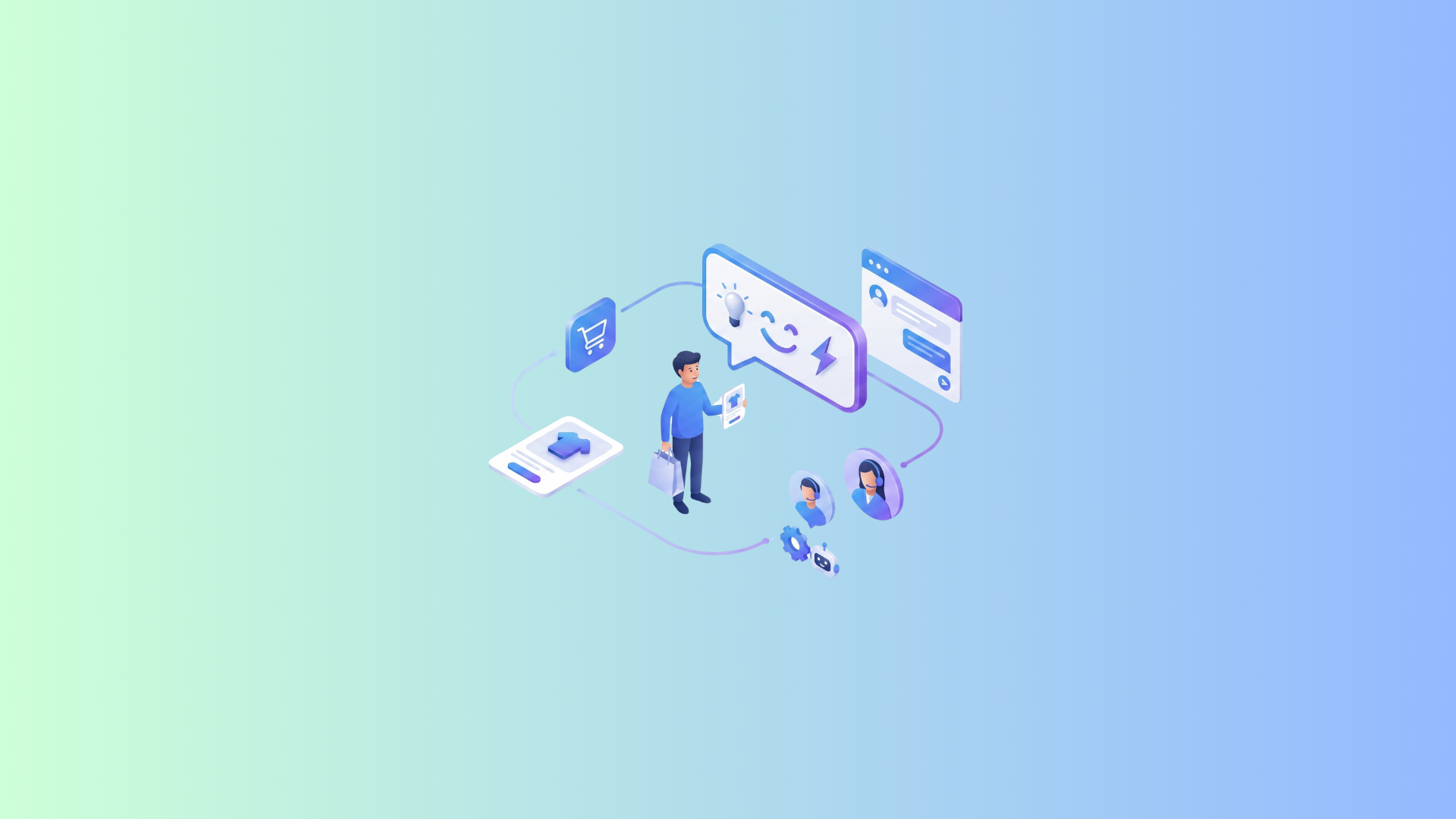
Online chat is the first point of live contact between a brand and a customer. This is where it is decided whether a visitor stays on the website, adds a product to the cart, or comes back again. At the same time, the B2C audience is the most demanding: customers expect an answer right away, a natural tone of voice, and the feeling that they are being taken care of.
In this article, we’ll explain how to set up chat communication for the B2C segment — from the first message to a repeat purchase. If you need a comparative analysis of approaches for different types of customers, we also recommend reading our article where we take a closer look at the key differences between the two models.
Who Is a B2C Customer in Chat: Psychology and Expectations
B2C stands for Business-to-Consumer, meaning a business that sells directly to the end consumer. Unlike corporate clients, regular buyers behave differently: they do not run tenders, coordinate decisions with a committee, or build financial models. Instead, they respond to emotions, convenience, and speed.
When a person opens a chat on a website, they have already taken the first step — they have shown interest. At that moment, their attention is at its peak, and the decision to buy can happen literally within minutes. A delay or a cold response can make that moment disappear.
Key Characteristics of a B2C Customer in Chat
- Expects a response within 30 seconds, with every additional minute reducing the likelihood of purchase
- Makes decisions independently and does not need internal approvals
- Responds to emotion: a friendly tone, personal attention, and natural language are more important than formal wording
- Values personalization: customers want to feel that the message is addressed specifically to them
- Sees the purchase as an experience, because a positive interaction builds loyalty and encourages them to return
Speed as a Competitive Advantage: Why Response Time Matters
In the B2C segment, response time is a commercial factor. A customer who does not receive a reply within a minute is already opening a competitor’s tab. Their purchase impulse is fragile, and inaction can easily destroy it.
The most effective approach is a hybrid model: an instant automated confirmation plus quick involvement of a live operator or a bot with specific answers.
How This Looks in Practice
- An automated reply is triggered instantly: “Hi! 👋 We’re already looking for the answer for you, just a second.”
- An operator or chatbot joins within 20–30 seconds
- Messages are short: 1–2 sentences to keep the pace of the conversation
- If no operator is available, the bot takes over and handles basic requests independently
An instant response is the first impression of the brand. And it is formed before the customer even learns anything about the product itself.
Tone and Language: How to Talk to Customers Naturally
One of the most common mistakes in B2C communication is an overly official or template-based style. “Dear customer, your request has been registered under number…” — this tone pushes buyers away because they expect a live conversation, not a bureaucratic process.
At the same time, the opposite extreme — excessive familiarity or a flood of emojis — can seem unprofessional and irritating. The optimal model is friendly but not overly casual, warm but not intrusive.
What Works in B2C Chat
- Addressing the customer informally, if appropriate for your audience, or by name if it is known
- A short confirmation of what the customer asked: “Great, you’re looking for a dress for a party!”
- Natural wording without bureaucratic language: “Let’s find the right option together” instead of “We will assist you in making a selection”
- 1–2 emojis where appropriate: they add a human touch but do not overload the message
- Specific questions that help find a solution faster: “What size do you need?”
What Destroys Trust
- Generic template phrases that sound empty without a specific next step: “Every customer is important to us,” “Thank you for waiting.”
- Delayed confirmation of obvious details, for example: “I see that you are interested in our product…”
- Excessive formality and long paragraphs where one clear sentence would be enough.
- Ignoring context, especially when the customer mentions an important detail: “I need this today.”
B2C vs B2B in Chat: Key Differences
To better understand the specifics of the B2C approach, let’s compare it with the corporate segment. If you work with both types of audiences, this table will help you clearly separate communication scenarios:
| Parameter | B2C Customer | B2B Customer |
|---|---|---|
| Response time | Up to 30 seconds | 1–5 minutes, with a high-quality response |
| Tone of communication | Friendly, informal | Business-like, expert |
| Purchase motivation | Emotion, convenience, price | ROI, efficiency, risks |
| Decision-making cycle | Minutes or hours | Days or weeks |
| Number of people involved in the decision | One person | A team or committee |
| What matters in the content | Benefit, emotion, reviews | Facts, numbers, case studies |
| Message format | Short, lively | Detailed, structured |
| Goal of the first contact | Sale or conversion | Lead qualification |
So, B2C and B2B chat communication require different approaches. In B2C, speed, simplicity, and emotional connection are key. In B2B, expertise, structure, and strong arguments come first. Understanding these differences helps adapt the tone, content, and message format to the specific audience.
Personalization Without Extra Effort: How to Make It Systematic
In B2C, personalization is all about context: understanding where the customer came from, what they viewed, whether they have contacted you before, and what they have ordered.
What Data Is Worth Using
- The page where the chat was opened: helps understand the customer’s intent.
- Previous conversation history: shows whether this is a new or returning customer.
- Products in the cart or wishlist: a perfect moment for a specific offer.
- Geography: helps with delivery terms and local promotions.
- Traffic source: if the customer came from an advertising campaign, they expect the relevant terms.
A personalized approach shortens the path to purchase: the customer receives a relevant answer right away, without unnecessary follow-up questions.
Dialogue Scenarios: From the First Message to a Closed Deal
Effective B2C communication is built on well-designed scenarios — flow scripts that cover the most common situations. These are flexible templates that give the operator direction without making the conversation sound robotic.
Scenario 1: The Customer Is Looking for a Specific Product
Customer: Is this jacket available in XL?
Operator: Hi! I’ll check that right away, just a minute 🔍
Operator: XL is available, and delivery is possible tomorrow by 6:00 PM. Would you like to place the order now?
The key here is not to stretch the conversation with unnecessary questions. The customer has made a clear request, so the answer should be just as clear.
Scenario 2: The Customer Has Doubts
Customer: Hmm, I’m not sure if it will suit me…
Operator: Tell me a bit more — what occasion are you looking for it for? We’ll find something that fits you perfectly 😊
An open-ended question reduces hesitation and turns the conversation into a consultation. The customer feels a more personal approach.
Scenario 3: The Customer Has a Complaint
Customer: I ordered three days ago and still haven’t received it.
Operator: Sorry for the inconvenience! Please send me your order number, and I’ll check the status right away and give you a clear update.
A prompt apology and immediate action, without vague promises, help reduce tension and restore trust.
Automation and AI in B2C Chats: Where Is the Line Between Bot and Human?
Bots and AI assistants have become an essential part of B2C support. They handle typical requests: order status, return conditions, and product availability. But there is a line where automation starts to cause harm.
Customers can feel when they are talking to a machine. And if the request is unusual or emotional, they need a human. The ideal model is: bot as the first line, operator for complex and emotional situations.
What Should Be Automated
- The first greeting and collection of basic information, such as name and request type
- Answers to FAQs: price, delivery, returns, sizes
- Order status check by order number
- Routing to the right specialist or department
What Should Stay With a Human
- Complex or non-standard requests where there is no template
- Complaints and conflict situations where empathy is needed
- Product selection consultations where live dialogue matters
- Returning customers with a personal interaction history
Modern platforms such as NovaTalks allow these levels to be combined in one interface: an AI assistant helps the operator formulate responses, adjust the tone, and even translate messages, while the human remains at the center of the conversation.
B2C Chat Metrics: What to Measure and How to Interpret Them
Setting up a chat is only half the job. The other half is understanding whether it is actually effective. B2C metrics differ from corporate ones: here, response speed and conversion matter more than the length of the decision-making process.
Key Metrics for a B2C Chat
- First response time: should be up to 30 seconds; if it takes longer, analyze the reasons.
- First contact resolution rate: the higher it is, the more effective the team is.
- Chat-to-purchase conversion: how many conversations end with an order.
- CSAT (Customer Satisfaction Score): a customer satisfaction rating collected immediately after the conversation.
- Repeat contact rate: if a customer returns with the same question, something went wrong.
- Average conversation duration: if it is too long, this may indicate inefficient scenarios.
These metrics should be tracked over time, not separately, but in relation to one another. For example, reducing response time may increase conversion, but if CSAT drops at the same time, it may mean that bots are replying quickly but not effectively enough.
Customer Retention Through Chat: After the First Purchase
Chat can become an effective retention channel if it is used correctly after the purchase.
A B2C customer who has had a positive chat experience is more likely to return. But this requires proactive communication — an initiative message from the brand.
How to Retain B2C Customers Through Chat
- A proactive message after purchase: “Your order is already on its way! Have any questions? Just message us.”
- A reminder about an unfinished order: “You left a few items in your cart — need help completing the order?”
- Personal recommendations based on previous purchases.
- A review request 3–5 days after delivery.
- Notifications about promotions that match the customer’s interests.
The key is not to turn chat into a spam channel. Every proactive message should be relevant and useful. One well-timed message is better than five intrusive ones.
Common Mistakes in B2C Chat and How to Avoid Them
Even a well-configured chat can lose effectiveness if systematic communication mistakes keep repeating. Below are the most common issues and practical ways to fix them.
Mistake 1: Slow Response Without Explanation
The customer is waiting and does not understand whether their message has been accepted for processing.
How to fix it: set up an automated reply with a realistic waiting time: “An operator will join within 2 minutes.”
Mistake 2: Overly Formal Tone in an Informal Dialogue
The phrase “Your request has been forwarded to a specialist” sounds distant, especially when the customer is asking about simple product details: color, size, or availability.
How to fix it: adapt the communication style to the context of the request, the type of product, and the audience’s expectations.
Mistake 3: Lack of Conversation Context
The customer has to explain the situation again, even though they have contacted you before. This reduces trust in the service and creates the impression of poor team coordination.
How to fix it: use platforms that store the full conversation history and give operators access to previous interactions.
Mistake 4: The Bot Does Not Transfer the Conversation to an Operator
The customer remains stuck in a loop of automated replies and cannot quickly get help from a real person.
How to fix it: provide a clear path to a live operator: “Would you like to speak with an operator? Type ‘operator’.”
Mistake 5: Complaints Remain Unanswered
An unresolved complaint quickly turns into a reputational risk: the customer may not only stop interacting with the brand but also publicly share their negative experience.
How to fix it: give complaints high priority and respond quickly, calmly, and to the point.
Frequently Asked Questions (FAQ)
What Is B2C Communication in Chat?
It is communication between a business and an end consumer through an online chat on a website, in messengers, or in a mobile app. The goal is to answer the customer’s request, help them make a choice, and encourage a purchase.
How Quickly Should You Respond in a B2C Chat?
The ideal first response time is up to 30 seconds. Even an automated confirmation such as “We’re already with you” significantly improves the service experience and reduces drop-offs.
Should You Use Bots in B2C Chat?
Yes, but thoughtfully. Bots are effective for typical requests: order status, FAQs, and product availability checks. For complaints, non-standard situations, and emotional conversations, a live person is needed.
How Do You Measure the Effectiveness of a B2C Chat?
The key metrics are first response time, chat-to-purchase conversion, CSAT (Customer Satisfaction Score), first contact resolution rate, and the number of repeat contacts with the same question.
How Can You Retain a B2C Customer After the First Purchase Through Chat?
Through proactive messages: delivery confirmations, cart reminders, personal recommendations, and review requests. The key is to make every message useful rather than intrusive.
Conclusion
A B2C chat is a full-fledged channel for sales and customer retention, which can deliver strong returns when configured properly.
To make it work effectively, you need a combination of three things: response speed that matches audience expectations, a natural and adaptive tone of communication, and smart automation that does not replace humans where they are truly needed.
Companies that invest in the quality of chat communication today are building a base of loyal customers who return and recommend the brand to others. And that is the most valuable asset in the modern B2C market.