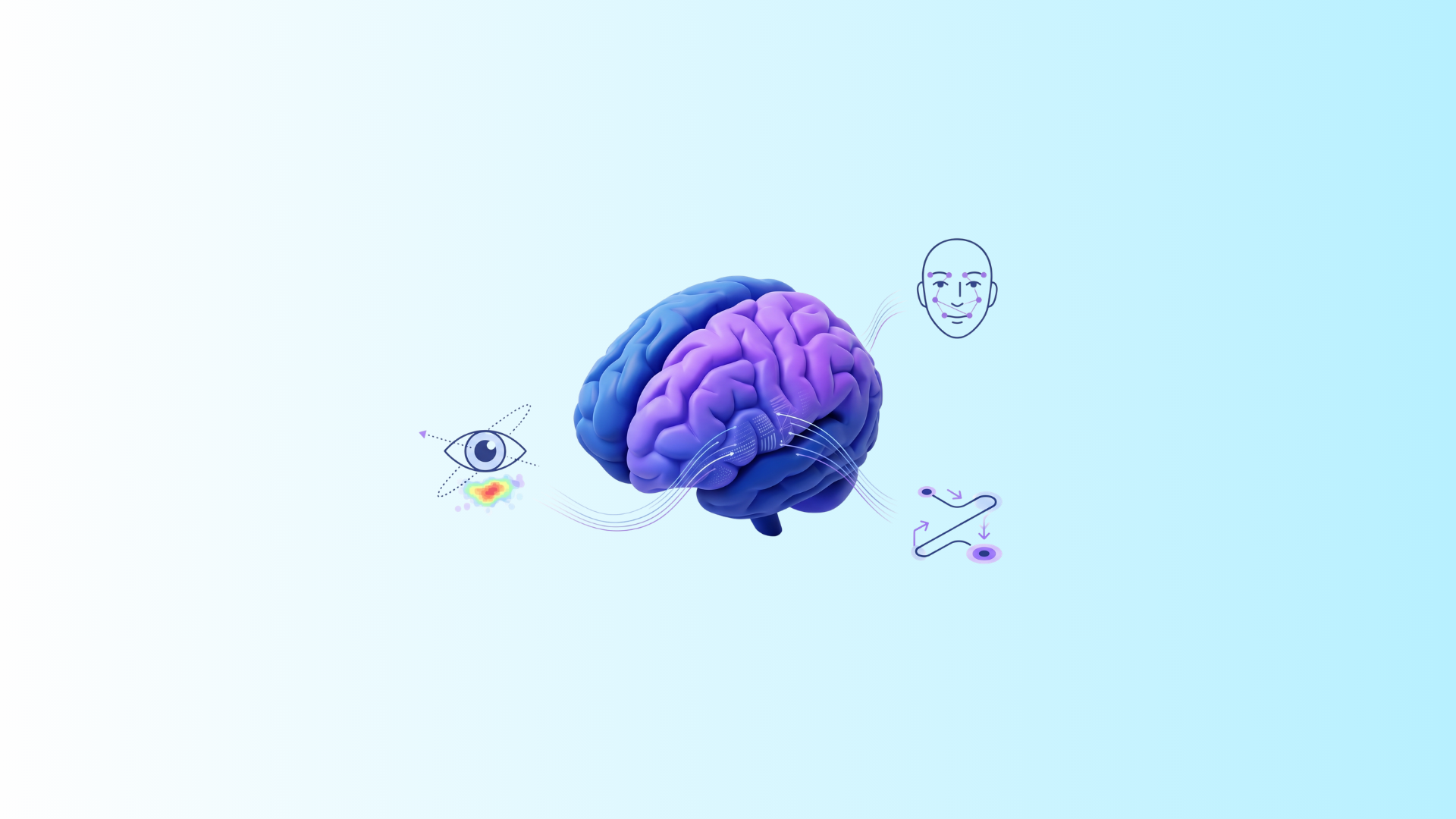
Neuromarketing grew from a simple observation: people don’t always understand why they buy what they buy. They rationalize decisions after the fact, while the real motives remain somewhere between attention, emotion, and habit. That’s why classic surveys and focus groups often paint a picture that doesn’t match actual behavior in a store or on a website.
Neuromarketing tries to close this gap — by measuring what a person doesn’t consciously control: the brain’s response to a stimulus, eye movement, micro-expressions, changes in physiological state. This is applied science at the intersection of neuroscience, psychology, and marketing.
But this is exactly where the main problem arises: there’s a gap between what neuromarketing actually is and what companies want it to be. Businesses enter this field with expectations the tool simply cannot meet, choose methods based on budget rather than task, and end up with data that leads nowhere. Not because the technology doesn’t work — but because it’s implemented without understanding its nature and limitations.
This article covers the most common mistakes in neuromarketing implementation and how to avoid them without wasting budget on polished reports with no practical value.
What Is Neuromarketing and Why Is It More Complex Than It Seems
Neuromarketing is the application of neuroscience and behavioral psychology to study consumer responses to marketing stimuli. It helps understand how a person processes information, what attracts attention, what emotions arise, and what ultimately influences a purchase decision.
But this is where the first trap begins. Neuromarketing doesn’t provide a magic key to the subconscious. It provides data — and that data still needs to be properly collected, interpreted, and turned into action. This is exactly where most companies stumble.
Mistake 1. Expecting “Mind Reading”
Perhaps the most common mistake is having inflated expectations from the technology — for example, believing that neuromarketing allows you to “look inside the consumer’s brain” and now you can know exactly what a person will buy.
In reality, neurometrics measures physiological responses: electrical brain activity, eye movements, changes in skin conductance, micro-expressions. These are indirect indicators of internal states. They’re useful, but they are not direct “mind reading.”
Practical consequence: a company orders an expensive study, receives beautiful heat maps and brainwave charts — but doesn’t know what to do with them. The data exists, but no meaning is found.
How to avoid it: before any research, formulate a specific hypothesis. Not “let’s see what the brain shows,” but “does the new packaging design feel more premium compared to the old one?” Only then does the data have somewhere to land.
Mistake 2. No Clear Research Hypothesis
In neuromarketing, as in any scientific approach, structure is essential: hypothesis, methodology, sample, analysis, conclusion.
When a business comes to a contractor saying “just test our ad,” the result is often useless. Research without a hypothesis is searching for an answer to a question that was never asked.
Moreover, without a clear research question, it’s impossible to determine which metrics matter. EEG will show dozens of parameters — which ones to trust without context?
What to do instead: start with the business problem. “We want to understand why conversion on the landing page is low” — that’s the foundation. Then formulate a specific question: “Does the user’s attention pause on the call-to-action button?” Only after that do you select the tool.
Mistake 3. Choosing the Wrong Method or Tool
Neuromarketing has different methods, each suited to specific tasks. Using fMRI to test banner ads is as pointless as hammering a nail with a microscope.
Key Neuromarketing Tools and Their Limitations
| Tool | What It Measures | Limitations |
|---|---|---|
| EEG | Brain electrical activity, engagement | Sensitive to noise, requires preparation |
| Eye tracking | Where a person looks | Doesn’t explain “why” |
| fMRI | Deep activation of brain regions | Expensive, laboratory conditions |
| GSR (skin response) | Emotional arousal | Doesn’t distinguish positive from negative emotions |
| Facial coding / FaceReader | Micro-expressions | Doesn’t work with masks, depends on lighting |
Businesses often choose a tool based on “this sounds impressive” rather than “this answers our question.” An EEG headset looks great in a photo, but if your task is to understand whether packaging feels eco-friendly, quality behavioral testing will serve you better.
Tip: always ask your contractor: “Why this specific method? What are its limitations in our particular case?” If the answer is uncertain — find another partner.
Mistake 4. Too Small or Unrepresentative Sample
In neuromarketing research, the sample is often small — around 20–30 people. This may be sufficient for pilot testing or with a very specific research question, but becomes a problem when major business decisions are made based on such data.
An even more serious mistake is an unrepresentative sample. If your audience is women aged 35–50 with average income, but the study involved university students, the data can be fundamentally misleading.
The brain responds differently depending on age, cultural context, experience, and even a person’s mood at the time of testing. The neural patterns of a 22-year-old and a 45-year-old watching the same video are simply not the same.
Minimum for reliability: for most tasks — at least 30–50 participants from your actual target audience. For more precise quantitative conclusions — more. And always verify the demographic profile of the sample before the study begins.
Mistake 5. Ignoring Context and Ecological Validity
A laboratory environment differs from reality. A person in a quiet room in front of a monitor with electrodes on their head is not the same person choosing a product on a busy street or scrolling through their feed before sleep on a smartphone.
This phenomenon is called ecological validity: how well results obtained in artificial conditions translate to real life. And here neuromarketing has serious limitations that businesses often ignore.
A clear example: a company tests an ad in a studio and gets excellent engagement scores. But in the real environment — social media, where countless competing stimuli exist — the ad “doesn’t take off.” The lab didn’t replicate the conditions of competing for attention.
Solution: where possible, conduct research in conditions as close to real as possible. Mobile eye tracking, in-store field research, testing in natural environments — all of this increases the value of the data.
Mistake 6. Neuromarketing Instead of — Not Alongside — Traditional Methods
Some companies come to neuromarketing with the idea: “We no longer need focus groups and surveys — we have objective brain data.” This is a dangerous extreme.
Neurometrics shows what is happening, but rarely explains why. Eye tracking can record that a gaze stops on a certain element — but is it because the element is attractive, or because it’s distracting and annoying? Without qualitative research, it’s hard to answer.
The most effective approach is triangulation: combining neurometrics, qualitative methods (in-depth interviews, focus groups), and quantitative data (A/B tests, sales analytics). Only then does the picture become complete.
Mistake 7. No Specialists to Interpret the Data
Neuromarketing data is not an Excel spreadsheet anyone can read. Its interpretation requires an understanding of neuroscience, statistics, and marketing context simultaneously.
A common scenario: the contractor delivers a polished PDF report with charts, the team reads it carefully… and doesn’t know what specifically to change in the product or communication. The data exists, but there’s no one who can “translate” it into practical recommendations.
How to prevent this: before launching the study, identify a specific person responsible for one simple task — take the data and turn it into actions. This can be someone inside your team or a specialist on the contractor’s side. If no such person exists on either side — that’s a signal: either fill this role first, or find a contractor who takes the project to completion and delivers not a report, but ready-to-use recommendations.
Mistake 8. Ethical Risks and Ignoring Consumer Trust
Neuromarketing touches on a sensitive subject: influencing the subconscious. Companies that abuse this or poorly communicate their research background risk their reputation.
For example, if it becomes known that a brand used neuromarketing to manipulate consumer choice (rather than improve their experience), the audience reaction can be sharply negative.
Principle: neuromarketing should serve to improve the consumer experience, not manipulate it. Transparency about how and why data is collected is both an ethical position and a business necessity.
Summary Table: Common Mistakes and Their Consequences
Mistakes in Neuromarketing Implementation
| Common Mistake | What It Looks Like in Practice |
|---|---|
| No hypothesis before research | Data collected, but no idea what to do with it |
| Sample too small | Conclusions that cannot be replicated |
| Ignoring context | Lab results ≠ in-store behavior |
| Overestimating tools | EEG as a “brand truth detector” |
| No team to interpret data | Data exists — meaning is never found |
How to Implement Neuromarketing Correctly: A Brief Roadmap
If you’re seriously considering neuromarketing as a tool, here is a basic framework to help avoid most of the mistakes described:
- Define a specific business problem and research question
- Choose a method that fits the task — not the one that sounds most impressive
- Verify that the sample is representative of your actual audience
- Bring research conditions as close to real life as possible
- Combine neurometrics with qualitative and quantitative methods
- Ensure there is someone on the team capable of interpreting the data
- Test insights in real conditions before scaling
- Follow ethical standards and data protection regulations
When applied correctly, neuromarketing provides a deeper understanding of the consumer that is difficult to achieve through other methods.
FAQ
Is neuromarketing suitable for small businesses?
Classic laboratory research with EEG or fMRI — no, it’s expensive and hard to justify at small scale. But some neuromarketing tools, such as eye tracking or facial coding, are becoming more accessible. It’s also useful to apply behavioral psychology principles (anchoring effect, social proof, cognitive ease) — they’re free and well-documented.
Can neuromarketing replace A/B testing?
No. Neuromarketing and A/B tests measure different things. An A/B test shows which version converts better in real conditions. Neuromarketing explains why people respond a certain way — before you’ve even launched a campaign. Together they offer far more than either alone.
How accurate is neuromarketing data?
Accuracy depends on many factors: what equipment is used, how the study is structured, who participates, and how results are interpreted. Neuromarketing shows trends and patterns, not absolute truth. Simply put: it’s a tool for better understanding, not precise prediction.
Is neuromarketing manipulation?
Not in itself. Knowledge of how the brain processes information can be used to improve interface clarity, reduce cognitive load, or communicate more honestly. Manipulation is the deliberate use of this knowledge to deceive or push people toward decisions that go against their own interests.
How do you evaluate a neuromarketing contractor?
Ask about their methodological foundation, examples of past projects (with results, not just client logos), their approach to sampling and data interpretation. A serious contractor will always be honest about a method’s limitations and won’t promise “100% access to the subconscious.”
When is neuromarketing clearly worth using?
Neuromarketing is most justified when traditional methods don’t provide answers: consumers say one thing but do another; surveys don’t reveal real motivations; you need to compare several options before launch and minimize risk. Also — for categories with high emotional involvement: food, automotive, finance, pharmaceuticals.
Conclusion
Neuromarketing is a powerful but demanding tool. Without a clear hypothesis, sound methodology, and qualified interpretation, even the most expensive equipment will bring no value to a business.
Neuromarketing works when it’s approached as a science, not just a marketing trend. Understand the limitations of your methods, ask the right questions, choose the right partners — and this technology will genuinely open new dimensions of consumer understanding.
And remember: the goal of neuromarketing is not manipulation, but deeper understanding. That understanding is the foundation of truly effective and sustainable marketing.