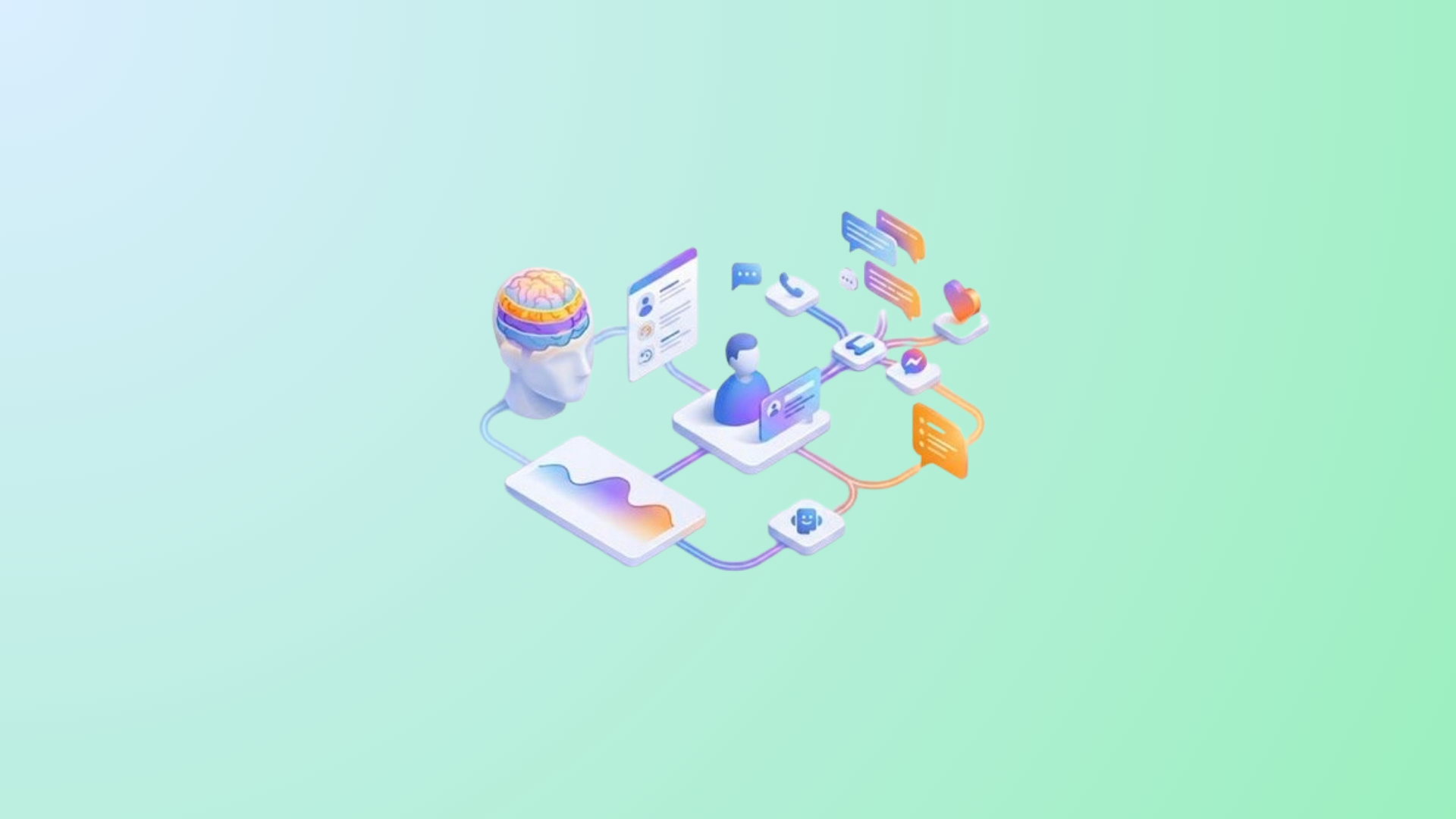
A customer visits your website, calls support, or writes in a messenger — and each of these interactions leaves a trace: emotional, behavioral, cognitive. Neuromarketing studies precisely these traces and helps businesses build personalized service that resonates on a subconscious level.
In this article: how the principles of neuromarketing apply to customer service, which mistakes they help avoid, and how a contact center can put this knowledge to use today.
Key takeaways: neuromarketing and customer service personalization
The main points of the article for quick orientation:
- Neuromarketing is the science of how a customer’s brain reacts to communication. It explains why some words, tone, and approaches work — and others don’t.
- Most decisions are made emotionally first, and only then rationalized. Personalization that takes this into account delivers a fundamentally different result.
- Three levels of customer perception — rational, emotional, and instinctive — must be considered at every point of contact.
- The tone of a conversation, response speed, and form of greeting are all neuromarketing tools available to any contact center.
- The AI tools of modern platforms make it possible to track a customer’s emotional state in real time and adapt communication accordingly.
- Personalization through neuromarketing is not manipulation — it is a deeper understanding of the customer and an honest response to their real needs.
What neuromarketing in customer service is and why businesses need it
Neuromarketing is a field that studies how the human brain reacts to marketing and communication stimuli. Its methods and core concepts are covered in detail in the article “Neuromarketing Implementation Mistakes in Business” In the context of customer service, we are interested in its practical application: how this knowledge changes the approach to communicating with the customer.
The key neuromarketing insight for service is this: a customer makes their decisions — to stay or leave, to recommend or complain — primarily on an emotional level. Rational arguments come afterward. This means:
- how a customer is spoken to is often more important than what they are told;
- the first impression of a contact is formed within seconds and influences the entire subsequent interaction;
- a negative emotion at a single point of contact can devalue a positive experience everywhere else;
- personalization that touches the emotional level builds loyalty far more effectively than discounts or bonuses.
Three levels of customer perception: how the brain processes service interactions
Neuroscience identifies three levels of information processing that directly affect how a customer perceives your service.
Instinctive level: the first second of contact
This is the fastest level — the brain reacts before the customer has even consciously registered anything. What operates on this level: response speed, the operator’s first words, intonation, and the sense of whether “something is off.”
Practical application: the greeting script, the time to first response, and the tone of the first message in chat all influence the customer’s instinctive reaction and determine whether they will be open to a dialogue at all.
Emotional level: how the interaction feels
This is where the customer’s attitude toward the company takes shape. Do they feel heard? Do they sense that their question matters? Does irritation arise from repeated questions or from waiting?
Practical application: addressing the customer by name, demonstrating knowledge of their context, and avoiding generic canned replies all create a positive emotional reaction that sticks in memory.
Rational level: evaluating the outcome
This is the level at which the customer consciously assesses whether their issue was resolved. But it’s important to note: even if the issue is resolved, a negative emotional experience along the way often outweighs a rationally satisfactory outcome.
Practical application: clarity of the answer, the absence of unnecessary steps, and a summary of the conversation should all reinforce the positive emotional experience rather than contradict it.
Neuromarketing personalization tools: what’s actually available to a contact center
A large share of neuromarketing principles is realized through concrete tools available to any contact center.
Customer sentiment and emotion analysis
Modern AI systems analyze a customer’s text and voice in real time, identifying their emotional state: irritation, satisfaction, anxiety, or neutrality. This allows the operator to adapt the tone and pace of their response while the conversation is still in progress — before an emotion escalates into a complaint or churn.
Personalized scripts based on the customer profile
Knowing who is in front of you — a customer with a five-year history or a new user, someone who has already reached out with a similar question or is writing for the first time — makes it possible to adjust not only the content but also the form of communication. This is a direct neuromarketing principle: the brain reacts more strongly to what is familiar and personal.
Micromoments: the right channel at the right time
Neuromarketing confirms it: a customer’s readiness to engage depends on the moment. A message sent through the right channel at the right time is perceived in a fundamentally different way.
Automated triggers and personalized messenger campaigns are applied neuromarketing: you make contact exactly when the customer is most receptive.
Cognitive offloading: simplicity as a tool
One of the fundamental neuromarketing principles is that the brain spends fewer resources making familiar and simple decisions — and it values that. In service, this means: fewer steps to resolve an issue, clear answers without unnecessary clarifications, and no need to repeat your problem every time.
Neuromarketing principles in customer service: from theory to practice
| Neuromarketing principle | How it shows up in service | Tool in the contact center |
|---|---|---|
| Emotional decisions precede rational ones | The tone and form of communication matter more than the content of the answer itself | Sentiment analysis, greeting scripts |
| The first-impression effect | The first seconds of contact define the entire subsequent dialogue | Response speed, the operator’s opening phrase |
| Personal resonates more strongly | Addressing by name and knowing the context reduce the customer’s anxiety | Customer card with interaction history |
| Cognitive offloading | Simplicity and the absence of unnecessary steps reduce stress | Omnichannel support, context retention |
| The peak-end memory effect | The customer remembers the most vivid moment and the end of the conversation | Conversation summary, AI agent assistant |
| Social proof | The customer trusts the experience of people similar to them | CSAT, reviews, personalized recommendations |
AI in personalized service: neuromarketing in action with NovaTalks
NovaTalks tools bring key neuromarketing principles to life at the level of a contact center’s daily work.
Automatic quality scoring and sentiment analysis. The system automatically scores 100% of conversations — script adherence, agent effectiveness, and overall conversation quality. It also captures the tone of communication, which helps spot broad patterns in interactions and adjust approaches where needed.
AI agent assistant. It corrects mistakes, adapts tone, and shapes the conversation summary — all in real time. The peak-end effect: the customer remembers how the conversation ended. A clear, warm summary is a neuromarketing investment in the next contact.
Omnichannel support and context retention. The customer doesn’t have to repeat their question — the system already knows who they are and what they reached out about. Cognitive offloading and the feeling of “they know me here” are two powerful neuromarketing triggers of loyalty.
Personalized campaigns. The right message, in the right channel, at the right moment — micromoments in action. Not a mass mailing, but a personal touch at exactly the right time.
Common mistakes: when neuromarketing personalization backfires
Excessive personalization that feels like being watched
A customer wants to be understood, but doesn’t want to feel surveilled. If a company demonstrates knowledge of details the customer never explicitly shared, it causes discomfort rather than trust. The line between “they know us” and “they’re watching us” is very thin.
Artificial warmth that reads as fake
A script written “to sound human” but delivered mechanically is worse than an honest, standard tone. The customer’s brain instantly detects the mismatch between form and content. Neuromarketing works only when a genuine intention to help stands behind it.
Ignoring the negative emotional peak
If a conflict moment occurred in the middle of a conversation, a “successful” ending doesn’t automatically erase it. The customer will remember the peak. The operator must be able to steer the emotional tone back toward neutral or positive while the conversation is still ongoing — and this needs to be taught.
Personalization in only one channel
A customer who is recognized in chat but forced to introduce themselves again over the phone experiences cognitive and emotional dissonance. Personalization must be consistent across all points of contact — otherwise it destroys trust rather than building it.
How to implement neuromarketing personalization principles in a contact center
Step 1. Audit your points of contact through the lens of emotion
Walk the customer journey yourself or through testing: where does irritation arise, where indifference, where a pleasant surprise? This is what a neuromarketing service audit looks like.
Step 2. Update scripts with the three levels of perception in mind
The instinctive level — first words and speed. The emotional level — addressing by name, demonstrating knowledge of context, avoiding canned replies. The rational level — clarity of the answer and a summary. Each level deserves separate attention.
Step 3. Connect tools for analyzing communication quality
Automatic quality scoring and call recording provide feedback on real conversations — where communication works and where there is room for improvement. This is the foundation for targeted script adjustments and team training.
Step 4. Train operators to read the customer’s emotional state
Technology prompts, but a human responds. The operator must be able to recognize signals of irritation or anxiety and adapt communication accordingly. This is a skill that can and should be trained.
FAQ: frequently asked questions about neuromarketing and personalization in customer service
Is neuromarketing in service a form of manipulation?
No — not if the goal is to understand the customer better and respond to their real needs. Manipulation is the use of psychological mechanisms against a person’s interests. Neuromarketing in service uses those same mechanisms so that the customer receives exactly the help they need.
Are neuromarketing tools available to small businesses?
Yes. Most neuromarketing principles are realized through basic tools: greeting scripts, customer context retention, and sentiment analysis in chat. This doesn’t require a laboratory — it requires a platform with the right functionality and a trained team.
What is the peak-end effect and why does it matter for service?
It’s a psychological phenomenon: people remember an experience not as an average, but by two points — the most vivid moment (the peak) and how it ended. For service, this means that even if there were difficulties in the middle of a conversation, a warm and clear ending significantly improves the customer’s overall impression.
Do operators need to be trained in neuromarketing?
Not in the theoretical sense, but practical skills are worth developing: recognizing the customer’s emotional state from text or voice, adapting tone, and ending the conversation well. This improves both CSAT and the operator’s own effectiveness.
Conclusion
Neuromarketing in customer service is about understanding how the customer actually thinks and feels — and building communication that matches that understanding.
Personalization that accounts for the three levels of perception, responds to emotions in real time, and stays consistent across all channels is what distinguishes service that gets remembered from service that’s forgotten the moment the call ends.
NovaTalks brings all the necessary tools together in a single platform — and each of these principles becomes part of your business’s real customer service. Try it free for 14 days.